Diagnostic Hearing Assessment
A full air and bone conduction hearing test, speech-in-noise testing and an ear examination, all in a calibrated room.
Has noise at work or during military service affected your hearing? We provide thorough hearing assessments and clear, professional reports for Victorian workers and Australian Defence Force veterans, with the time and care to explain every result.
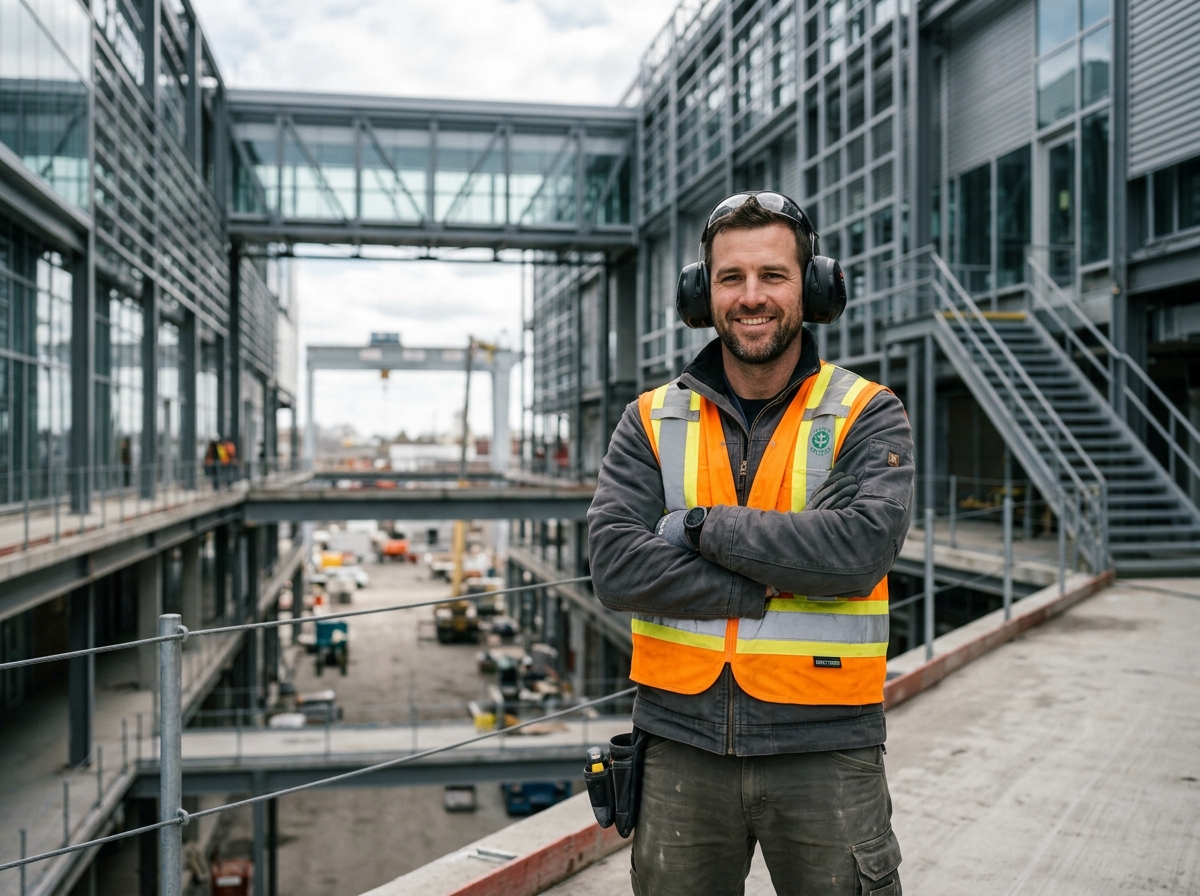
Source: WorkSafe Victoria & Safe Work Australia.
Years of exposure to loud workplaces or military environments can cause permanent noise-induced hearing loss (NIHL). Because it usually affects high-pitched sounds first and develops slowly, many workers and veterans adapt without realising how much their hearing has changed, until conversations become harder to follow.
Loud noise damages the tiny hair cells inside the inner ear (the cochlea), and once damaged, these cells do not grow back. How much hearing is affected depends on how loud the noise was, how long and how often you were exposed, and the type of noise.
Common signs and symptoms include:
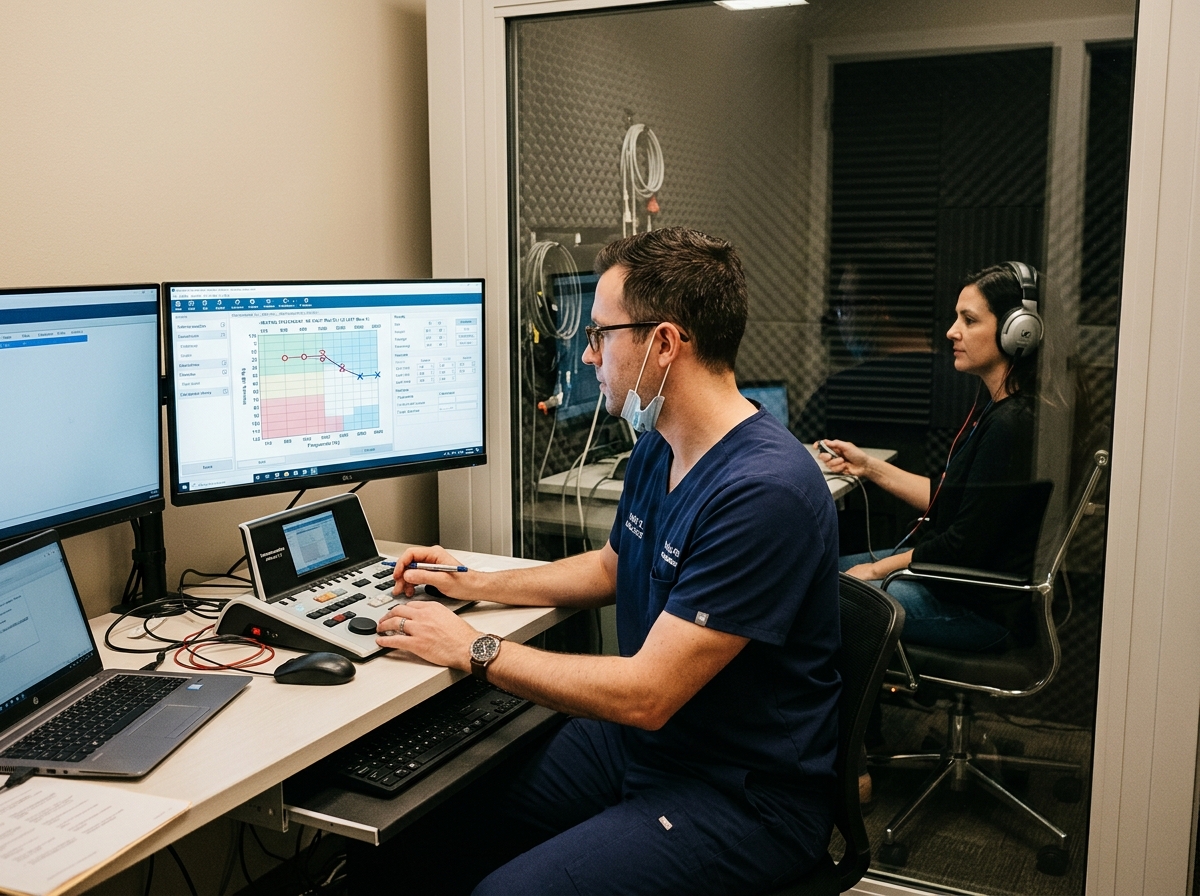
We measure your air and bone conduction hearing from 250 Hz to 8000 Hz, how well you understand speech in quiet and in noise, and how your middle ear is working, for an accurate and reliable result.
Across Victoria and in the Defence Force, many people work around noise levels above what is considered safe. These are some of the most common.
Stamping presses, CNC fabrication, metal tooling, bottling lines and continuous machinery noise.
Jackhammers, concrete saws, nail guns, excavators, grinders and framing work.
Small arms fire, artillery, jet engines, armoured vehicles and firing ranges.
Heavy diesel transport, container cranes, forklifts, conveyor systems and distribution centres.
Blasting, drill rigs, rock crushers, screening plants and haul trucks.
Commercial and military aircraft engines, ground crew and baggage handling, and engine testing.
Rattle guns, angle grinders, panel beating, hydraulic presses and engine testing.
Chainsaws, tractors without cabs, grain augers, crop-spraying aircraft and timber mill saws.
Even if you wore earmuffs or earplugs, years of noise exposure, or times when protection was removed or did not seal well, can still cause permanent hearing loss. Your full work and service history is an important part of your hearing report.
Every assessment is carried out personally by Principal Audiologist George Sebastian (BASLP, M.Sc. Aud), accredited by Audiology Australia.
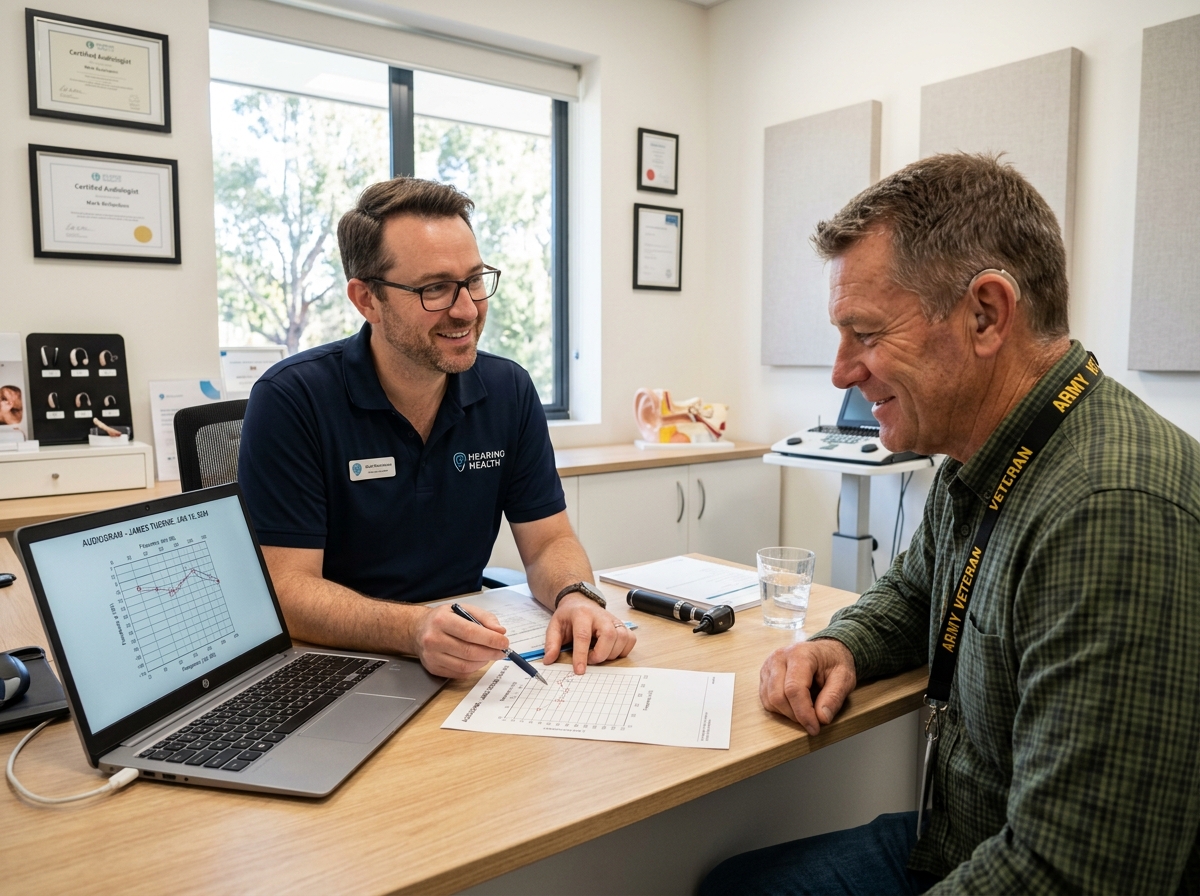
A full air and bone conduction hearing test, speech-in-noise testing and an ear examination, all in a calibrated room.
We measure the pitch and loudness of your tinnitus, understand how it affects your daily life, and guide you through practical ways to manage it.
Objective, standardised reports prepared for WorkSafe Victoria, Comcare and DVA claims.
Independent recommendations across all major brands, with every fitting checked using Real Ear Measurement (REM).
Follow-up appointments, fine-tuning, annual hearing checks and help with ongoing supplies, for as long as you need us.
A general overview of how the Victorian workers' compensation scheme treats hearing loss. WorkSafe Victoria assesses and decides every claim individually.
In Victoria, there is no minimum percentage of hearing loss required to claim the cost of necessary hearing aids and audiology care.
A lump sum impairment benefit requires a binaural hearing loss of at least 10%. Once this has been met, it does not need to be met again for later claims if your hearing worsens.
WorkSafe can fund a complete hearing aid package once every five years, including the hearing aids, fitting checks, batteries and ongoing care.
Hearing aids and related care generally need approval from WorkSafe or its agent before they are ordered or fitted. We can help you with this step.
Australian Defence Force Veterans: If you have served in the ADF or hold a DVA Gold or White Card, you may be eligible for subsidised hearing care under the Australian Government Hearing Services Program. Visit our Pensioners & HSP page for details.
A clear path from your first appointment through to long-term care, with support at every step.
Call us or request an appointment online. Just let us know that your concerns relate to noise at work or in the military.
We carry out a full hearing test in our calibrated room and talk through your noise exposure history with you.
George explains your results in plain language and prepares a formal report for your GP or claim adviser.
You or your legal representative lodge your claim with WorkSafe Victoria, Comcare or DVA, together with your hearing report.
Once approved, we fit your hearing aids, check them with Real Ear Measurement, and continue to support you long after.
Prime Audiology provides hearing assessments, objective testing and clinical reports. We do not provide legal advice and cannot guarantee the outcome of a claim. Decisions are made by WorkSafe Victoria, DVA or the relevant insurer, based on:
For legal advice about your claim, please contact WorkSafe Victoria, the Department of Veterans' Affairs, or an accredited compensation solicitor.
Yes, it is possible. Earmuffs and earplugs greatly reduce noise, but they cannot remove all risk, especially with very loud noise such as artillery, blasts or heavy machinery, or if protection was sometimes removed or did not fit well. A hearing assessment will show where your hearing is today.
No. Noise-induced hearing loss develops slowly and is often only noticed years after leaving a job or after retiring, when age-related changes add to earlier noise damage. Your full work and military history is still relevant.
For medical and like expenses, such as hearing assessments, hearing aids, batteries and ongoing care, Victoria has no minimum percentage of hearing loss. A separate lump sum impairment benefit requires a binaural hearing loss of at least 10%.
This is very common. Previous hearing tests and service records help insurers understand where your exposure occurred, so please bring whatever records you have to your appointment.
We provide the hearing assessments, audiograms and formal reports that insurers and solicitors need. The claim itself is lodged by you, your employer or your legal representative.
Please bring photo ID, a list of your noisy jobs or defence service with approximate dates, any previous hearing tests, your current hearing aids if you have them, and any WorkSafe or DVA claim numbers if a claim is already open.
Call the clinic and let us know your hearing concerns relate to work or defence noise.
0466 233 164 Call NowRequest an appointment online and we will contact you within one business day.
Request Appointment OnlineThe information on this page is general and is not legal advice. Results vary from person to person. Claim eligibility is decided by WorkSafe Victoria, DVA or the relevant workers' compensation authority.
Qualified, Accredited & Trusted
 Accredited Audiologist
 Professional Member
 Hearing Services Program Provider